Showing posts with label History. Show all posts

Wednesday, July 15, 2015

Moloka'i - Alan Brennert


What an interesting read! Not only is this book an accurate account of how the Hawaiian leadership and the US government dealt with a significant leprosy (Hansen's disease) outbreak, but it tells the story of one young girl, Rachel Kalama who is diagnosed with leprosy very early in life and what her ensuing years look like, as she is exiled to the government sanctioned quarantine community of lepers on the island of Moloka'i.

This was a sad story, but make no mistake in thinking that the life of Rachel was a total downer. Alan Brennert has created a cast of strong characters that support the story of the leper colony and the changes it goes through, as doctors and missionaries work to learn about the disease, develop treatments, and attempt to make life as normal as they can for the people being ravaged by the disease. The book is a fictionalized story of Rachel and her family and friends, but the history of the colony on Moloka'i and the information about the disease is very well researched and presented.

The historical novel centers on Rachel Kalama. She is a young Hawaiian girl who is diagnosed with the disease when she is seven. Rachel comes from a large close family, but the moment her diagnosis is confirmed, she is removed from her family and shipped with other afflicted people to the leper colony on Moloka'i. She is housed at a Catholic mission school with other girls and grows up in a loving, but isolated community. Because society doesn't understand the disease and fears the ravaging nature of the illness, contact with with others is discouraged and made very difficult by the strict rules of quarantine. Thus, a vibrant community grows within the colony amongst those living there. The story follows Rachel as she grows up, makes friends, loses them to the disease, marries, takes many experimental treatments, and finally has some success in fighting her form of the disease. No spoilers ... it's a great story and she is a strong, smart, and feisty character that never gives in to total despair.

The book is also a terrific read for those who don't know the the story of Moloka'i's history or the particulars of what leprosy really is. I learned so much about the disease by reading this book. I don't know that Alan Brennert has written any other books, but he did an awesome job on this one ... enough said.



Thursday, June 4, 2015

The Black Tower - Louis Bayard


I grew up in the extreme northern reaches of New York State. That being said, there was this lovely but decrepit chalet-type home that sat on the outer border of of small town called Fort Covington (near Massena, my hometown) that had the legend of the lost Dauphin attached to it. I was always intrigued by the legend that Louis-Charles, the son of Marie Antoinette and Louis the XVI was somehow spirited away from the Jacobin prison in which he and his sister were held. The story goes that royalists helped him flee prison, cross the Atlantic and settle in anonymity in a rural backwater in order to keep him from forces that would see him dead. I wondered and built fantastic stories in my mind how a prince might be guarded by faithful and monied allies and sent to safety to live out his life away from the horror that he'd surely witnessed during the Reign of Terror.

Finding Louis Bayard's rollicking story about the legend of the lost Dauphin, a rowdy, raucous French detective called Eugene Vidocq that has a penchant for outlandishly accurate disguises, a young doctor who is pioneering the study venereal disease at a time when it was ravaging the French elite, and a young French gardener who is mysteriously innocent for one his age was such a fun experience! This mystery/historical thriller is masterfully written and even more masterfully narrated. It was wonderful!

I'll not spoil the storyline by giving away plot, but just know that there is murder, subterfuge, hidden relics of the Reign of Terror and the following Napoleonic era, royals and gentry who are less than honest about their past, bawdy humor, and wonderful characters that are endearing. Great read, even better listen. Simon Vance is a professional reader for the Royal National Institute for the Blind as well as a radio announcer for the BBC radio ... he does an incredible job developing the character of Vidocq. His command at reading and interpreting the story is just stellar!

Okay .. have I gushed enough ? If you're doing a road trip, working at home at a sit-down project or puttering in the kitchen this would be a worthy audio experience. I'm off to return the 'book' to the library and check out another by Louis Bayard.


Sunday, April 5, 2015

Dead Wake: The Last Crossing of the Lusitania


The story of the sinking of the Lusitania has fascinated me for a long time. This latest book by Erik Larsen was a complete submersion into the history of the incident of German aggression against American citizens and shipping that decided the United States leadership's step away from isolationism and forced the US entry into World War I.

What this book does better than any other recounting of the sinking of Cunard's luxury liner is put a human face on the ship's manifest of passengers while also painting an incredible picture of the British government's communications intelligence and the German government's aggressive U-boat campaign to disrupt all international shipping in the seas that surround Britain and Ireland's shores.

Into this dangerous environment, Cunard continued to sail its civilian transport liners. To boot, some of the ships' holds were taken up with ammunition and weaponry that were to serve the British war effort against Germany. People, blithely off for a visit with relatives or traveling for specific business, were placed in the delicate position of being deemed party to aggression against Germany. Britain's code breakers knew of increased U-boat surveillance of the seas around England, but did nothing to communicate the danger to the civilian ships passing through the region. They feared discovery by German counterintelligence. British government policy blatantly ignored the need to escort civilian ships to the point that one becomes convinced that the leadership was aware that collateral damage would occur and hoped it would bring the US into the war as an ally sooner rather than later.

The Lusitania, cruising into the waters where U-boats were preying on all forms of ships, made a drastic encounter that, with one perfect torpedo hit, caused the ship to sink within thirty minutes of the strike. Imagine almost two thousand people moving through the ship to attempt to get to life boats. Imagine life jackets that have not been demonstrated for passengers being donned improperly. Imagine a massive ship that begins to list to one side, thus incapacitating the life boats all along that side. Imagine a crew that is ill-trained for launching the remaining life boats. Imagine the disaster.

This book was a real page-turner. Larsen followed several passengers on their voyage, the captain of the German U-boat that sunk the Lusitania, several of the British intelligence officers, and Woodrow Wilson, as he absorbed the ever-increasing aggression of the German navy against American ships and citizens.

Larsen puts a number of faces and lives front and center that tell the story of the Lusitania in a far more interesting and gripping fashion than any history book that I ever used to understand the naval disaster and how it brought the US to the brink of war.

A really good book that I highly recommend for anyone hooked on history ...


Sunday, March 1, 2015

The Winter Ghosts -Kate Mosse


Pitiful  old Winter has returned ,
Limping up and down our roads,
Spreading his white blanket of snow
While the Cers wind cries in the branches of the pine trees.
- traditional Occitan song


So begins the story of an unsettling encounter between a young British man and an antiquarian bookseller that reveals a ghost story worthy of a Poe short story. In fact, I sometimes felt I was reading Poe, Oscar Wilde, or Henry James, as the tone of this novel has that same sort of solemn atmosphere and a sense of dark foreboding. While I found the story pretty predictable, it was satisfying to curl up in bed with just the bedside lamp on and settle into this story of grieving and eventual healing. The story is sad, but the description of setting and the psychological study of young Freddie, the narrator of this ghost story is compelling.

The year is 1933 and Freddie is in Toulouse,seeking a translator for a document that has come into his possession. When he enters La Rue des Penitents Gris, he is seeking a bookshop run by one Monsieur Saurat. An ancient document written in an old dialect holds a message that has haunted Freddie for four years. Monsieur Saurat is immediately intrigued and invites Freddie to sit over a glass of brandy while he examines the vellum. It's old - very old. The bookseller is intrigued. Before he will translate the piece, though, he asks Freddie how he came upon this important bit of history.

And the story goes from there. Freddie has ghosts in his family closet, but he has also encountered ghosts in the mountainous countryside of Ariege ... his beloved brother has been one of thousands lost to the barbed wire, bombs, and gas of the first world war and Freddie has suffered grief beyond his tolerance. Coming from a sanatorium, after a grief stricken breakdown, Freddie finds himself in the south of France. There, his tender state makes him susceptible to the connections of ghosts from the past. Freddie is the luckiest man, as he encounters a ghost that will heal him at a small price.

This is a good ghost story that began as a short story and grew into a novel. It's the perfect story for a cold winter's night. I've enjoyed Kate Mosse's writing in the past and I will, no doubt, continue to pick up her work in the future.

Could I have picked a more perfect book for this past cold week? In a word, no.


Sunday, February 22, 2015

Flight of the Sparrow - Amy Belding Brown


“It is a solemn sight to see so many Christians lying in their blood, some here, and some there, like a company of sheep torn by wolves, all of them stripped naked by a company of hell-hounds, roaring, singing, ranting, and insulting, as if they would have torn our very hearts out; yet the Lord by His almighty power preserved a number of us from death, for there were twenty-four of us taken alive and carried captive.” - Mary Rowlandson


The captive narrative of Mary Rowlandson, redeemed prisoner of native tribes that fought for their land and lifestyle during King Philip's War, became an instant phenomenon when it was published in 1682. Mary was the wife of Joseph Rowlandson, pastor for the frontier settlement of Lancaster, Massachusetts. During the winter of 1675, the settlement was attacked by Nipmuck, Narragansett, and Wampanoag tribal warriors. The homes and barns were burnt, many of its citizens killed, and twenty four survivors were taken captive. 

Amy Belding Brown takes the bare bones of this horrific chapter of Colonial American history and builds a strong fictional account of Mary Rowlandson's voyage into the heart of native culture and back again. Brown does not 'gild the lily' by trying to write a romantic account. She honestly confronts the harsh forced trudge of the captives as they deny their wounds in an effort to survive the pace that their captors set, negotiate a new culture with the confusing babel of different tribes' languages, vastly different sexual politics, and confounding behaviors that can seem at one moment brutal and at another compassionate.

Mary loses one daughter on the forced march west and north toward the modern day New Hampshire/Massachusetts border and the Connecticut River valley. When Sarah dies, her body is buried by the natives in a show of respect to Mary's beliefs. Mary must move on, praying that her other two children are being treated well by their captors and that her husband, Joseph survived the attack and is working toward her release and redemption.

As time passes,though, Mary comes to be conflicted about her perceptions of the natives and their culture. She finds much freedom, even as a captive. She comes to value her connection to nature and the beauty of the natural world around her, and she values her burgeoning friendships with certain of her native captors and fellow 'slaves'. She questions God's purpose in placing her in the position of a slave and begins to see it as an awakening experience, meant to make her question the values and policies of her Puritan world. She worries how she will ever adapt to a return to English society should she be 'redeemed'.

This book is an excellent treatment of the captive experience that Rowlandson and others suffered during the great cultural clash between the colonizing and native cultures of the 17th century. Amy Belding Brown has taken historical fiction and used the genre well to bring a harrowing time to life for the reader, giving a thought-provoking take on a brutal time. It is obvious that she researched her topic well, as the novel closely follows events as written in the true-life account that Mary Rowlandson wrote of in her book called The Narrative of the Captivity and Restoration of Mary Rowlandson. That narrative was published in 1682. Belding's novel continues Mary's story after her ransom and brings into question the role of Increase Mather, the influential Puritan pastor and academic in its writing and publication. Mary's reversal of circumstances create an unsettling feeling within the reader ...she becomes the sparrow in the cage - once captive in a cage, set free during a chaotic clash, only to return to the cage at a later date. What to make of the sparrow's song? Hmmmm.

It left me wondering just how well Mary truly adapted when she did return to English society after her ransom was paid and she made her way home.


Post Note: I found this book so compelling because one of my husband's ancestors, one John Allbee, was a victim of the Mendon massacre of  July 1675, carried out by the same native tribes  that attacked Mary Rowlandson's Lancaster in February of that year. Benjamin and his grandson, John Allbee (the younger) fled the region and settled for a time near Rehoboth, Massachusetts before going north into New Hampshire and Vermont after the natives had been 'subdued'.  


Friday, February 20, 2015

Songs of Willow Frost - Jamie Ford


Jamie Ford's debut novel, Hotel on the Corner of Bitter and Sweet,was a good sell,but got mixed reviews. I read it and liked it so much that it got passed around my 'family reading circle'. Last week, I found his second novel, Songs of Willow Frost at the local library. The second novel returns to urban Seattle. This time he centers the story around the time of the Depression-era financial free fall and the rise of America's burgeoning film industry. His story centers around young William Eng, a young resident of the Sacred Heart Orphanage, who is turning twelve and still wonders when his mother will return for him. When he learns of the Hollywood actress Willow Frost's triumphant return to the stage in Seattle, he is sure that she is his mother. He sets out to see and speak to her. Thus begins a series of flashback chapters that tell of Willow's and William's sad lives.

This is a melodramatic story that gives an excellent snapshot of the prejudice within the Asian community of the time and in the larger American society - prejudice against actors, Asian-American citizens, the poor, and women. Liu Song, William's mother, compromises herself in many ways -by passively accepting 'her place' within her family, by changing her Asian name in order to become more acceptable within the theatrical world, by giving up her parental rights when she becomes financially strapped, and finally by losing her self-respect when she is confronted by a government child welfare officer who insists she return young William to his father. Sad circumstances, societal prejudice, government bureaucracy and misguided social policy destroys this small family.

Years later, there is a chance to make recompense, but will Liu Song and her son be able to survive after their reunion? That question is never answered and the reader is left to hang...and hope. Perhaps there will be a follow up novel that continues the story.

I wished Ford had knitted the strings of his story up with a more satisfying ending, but he did give his readers a good snapshot of Depression-era America, the beginnings of the movie culture that Hollywood cultivated, and the social and religious programs of the Progressive era that were misguided in their pompous practices that disregarded personal rights.


Sunday, December 28, 2014

Speeches That Changed the World - Quercus Publishing


This is a book that one will take in small doses and around which one will do extra reading and video research. Initially, I came to this book to read Martin Luther King's 'I Have a Dream' speech, but found myself drawn to the speeches of Neville Chamberlain, Adolf Hitler, Winston Churchill, FDR, and finally, to Elie Wiesel. Strong words that swayed masses of people, left some shaking their heads, kept millions glued to their radio speakers, brought many to tears. The power of a strong message delivered masterfully is brought home to the reader, as each speech is read and then contemplated further through added research.

I highly recommend this book. It made me stop thinking about the drivel that one hears in the sound bites on nightly news and think about those moments in history when the right person spoke up to change the world, for good or bad. It helped me to put events in perspective and to take the moment of the speech as a jumping off point for further review of some of the most important moments in history.

It is a book that enourages us to 'never forget', to always honor the one who speaks up, to think deeply on man's foibles and his good and bad points, to always think about the message before blindly accepting the messenger, to question and evaluate the message of the speechmaker, and to remember one's own humanity and values - that small voice of conscience- while one listens to another louder and more strident voice.

Choosing the speeches for this latest edition of Speeches That Changed the World must have been an arduous task. My compliments go to Simon Sebag Montefiore and the editorial team at Quercus Publishing. One other thing I applaud is the inclusion of the DVD documentary included with this edition. It is an historical overview of 20th century political events that gives background to the speeches included in the book. It should be looked at only as an overview, though. There is so much on the Internet and in other books of history that can give real depth to the speeches and the men and women who spoke.

A good reference for anyone from middle school on up to use in researching world history and a great book to have on the shelf so that one can review famous speeches when they are referred to in conversation or in media.

Monday, December 8, 2014

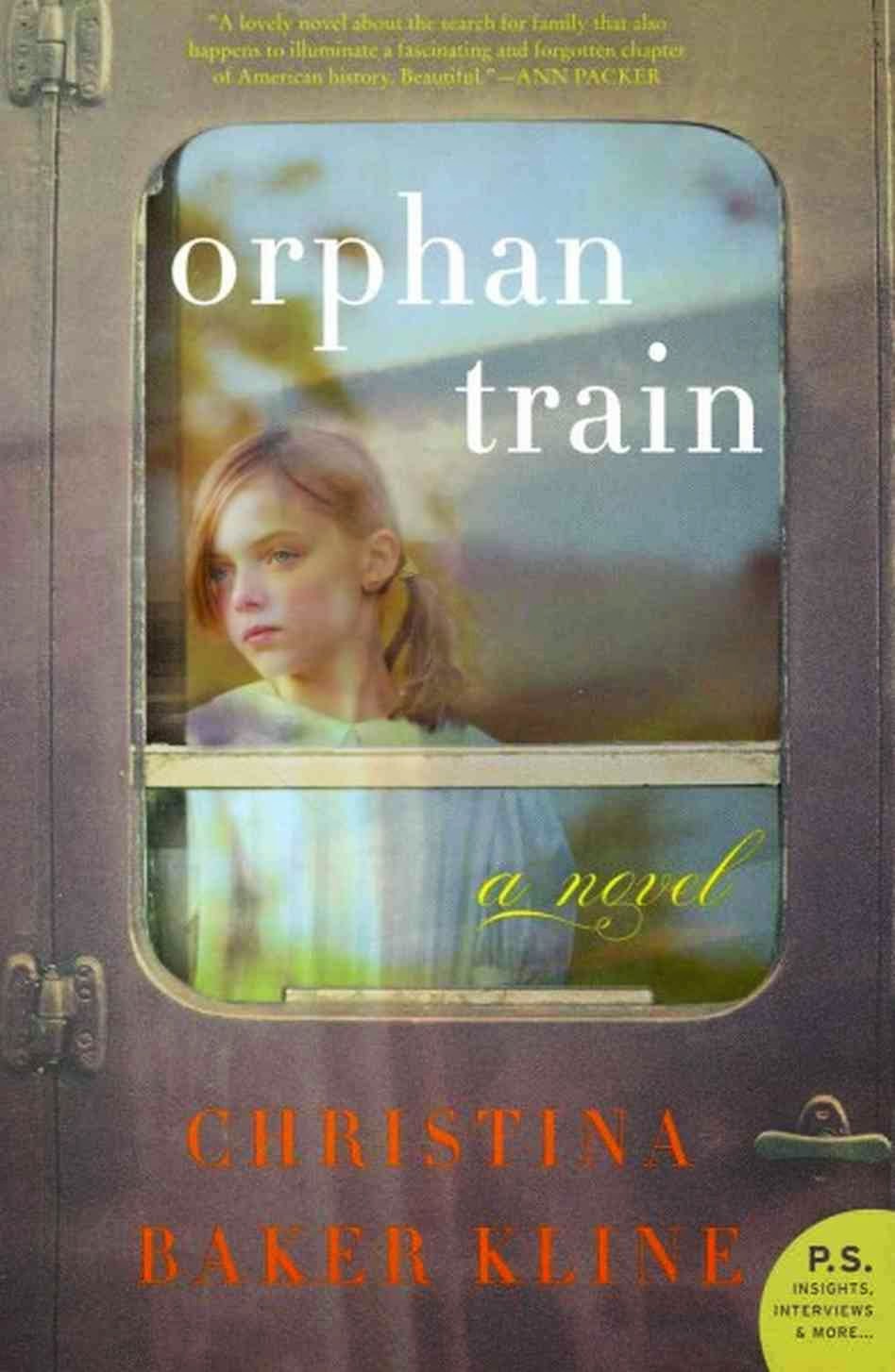
Orphan Train - Christina Baker Kline


These days, I seem to be picking novels that have two parallel stories going that build to tell a more complete tale and explore common themes. Christina Baker Kline's novel is one more of that ilk. In it, her modern day protagonist, Molly completes a school oral history project in which she must ask an interviewee questions about their lives and change. What did you choose to take with you? What did you leave behind? What insights did you gain? Deep questions, all.

Molly is a teenager that will be aging out the foster care system at the end of her high school experience. She has been shuttled about from one foster family to the next over the years. She travels light. She guards her emotions and puts on a Goth facade that isolates her from those around her at school. She tries to never get too close to anyone, as she never knows when she'll be pulled from one family and school to be plunked down in another.

Vivian Daly is an elderly retiree, living in her vacation home in nearby Bar Harbor, Maine. Before retiring, she lead a life as a successful department store owner in Minnesota and has decided that her attic must be cleaned out, but can't manage the heavy work it takes to jockey boxes and cartons, filled with nearly a century of life's artifacts and detritus.

Molly, gets in trouble with the local library when she attempts to steal a book. In order to avoid legal hassles with the foster care system, she signs on to do community service hours and gets hooked up with Vivian Daly. She will volunteer to help Mrs. Daly clean out her attic and thus begins a wonderful friendship. Both characters are guarded about being too open with each other, but as time goes by and the community service hours mount up, Molly and Vivian find common bonds that will help each of them ponder the losses they've had in life, the important things and values that they have carried with them over time, and the need for true emotional connection with others.

I was talking with a friend about this book. She was saying that the local middle school teachers were looking at this book as a read for their students. We both thought it more appropriate for high school. The reading level is not difficult, but the content and topic seemed a bit advanced for young kids. This book deals with immigration and the prejudices that were common during the early 1900's towards immigrants, family losses, abuse, alcoholism, mental illness, rape, the orphan trains that ran from eastern urban centers to midwest towns that brokered 'homes' for young street children and orphans, modern day foster care and the problems with oversight, building emotional relationships and mending those that are 'broken' emotionally. Deep topics, all. I honestly thought discussion of the topics would be more fruitful with older kids. The issues of authority and system failure when abuse and rape are involved would be valuable discussions for teens to explore these days, given what we're seeing in the press.  The issues of immigration and how we deal with the poor and needy could also be valuable discussions with older kids, but could be too 'gritty' for middle school aged kids (IMHO). The historical topic of the orphan trains is pretty complex too and worthy of further research to find out the true stories of thousands of children who were shuttled out of the cities in a Progressive Era social experiment that, while well-meaning, was poorly monitored in many cases. So ... this novel has a lot of 'meat' for a simple story.

The themes don't bog down the story, but they're there. Kline moves her novel along really well, jumping between modern day Maine and Depression-era Minnesota. The reader learns of the tough start to Vivian Daly's life as she is shifted from one foster family to the next during her early teen years. Molly, in finding out certain details of Vivian's life sees the perfect interviewee for her history project and in the process must confront those questions in her own life. All ends well in this book, but one is left to wonder about those thousands of kids and their real life stories ...

A fast and thought-provoking read ...


Monday, December 1, 2014

The Telling - Jo Baker


I love  it when I find a new author, of whom I know nothing. I love it even more when that author has a body of work that I can jump right into. Jo Baker's work was unkown to me until I came upon her novel called Longbourn. Placing the story at the Pemberly estate and wrapping the characters of Jane Austen's Pride and Prejudice into a different spin was the perfect tease for me. I do love my Jane Austen, you see. But wait! This Jo Baker has written other things!

Tuesday, November 25, 2014

The Museum of Extraordinary Things - Alice Hoffman


I love this book, but I love just about everything that I've read by Alice Hoffman. She has such a wonderful way of building these magical worlds in which she places her characters. In this book, it's the gritty world of turn-of-the-century Brooklyn. This is a place of hard working immigrant factory workers who grind out an existence in the sweatshops of Manhattan and then spend their bits of free time escaping to the seaside attractions of Brooklyn's Coney Island. What makes it 'otherworldy' is that she places us smack dab in the center of this odd little museum of curiosities. One can practically hear the carnie music from Coney Island in the background, as we move with Coralie through the rooms of her home, watching the odd cast of characters that her father has hired to house the Museum of Extraordinary Things. Her father's odd assortment of natural wonders, geological artifacts,  and freakish live specimens feed the public's ghoulish hunger for leering at the deformed and different. For a while, the museum is a success and life for Coralie is comfortable and sheltered.

As Coralie grows older, though, her father's fortunes are slipping lower in status, she learns more and more of his dark side and willingness to compromise her, his own daughter, in order to survive in the business of side-show entertainment. The area along the seashore is being developed and larger, glitzier attractions are being promoted. Coralie's father is faced with finding more extravagant and outlandish acts to draw the public and Coralie becomes fodder for her father's warped imagination. She is pressed into service as 'the living mermaid' in the large water tank at the museum and when that act becomes 'old' is forced to swim about naked to satisfy leering gawkers' prurient urges, safe behind glass, but violated, nonetheless. In rebellion, she comes into her own, growing more emotionally independent and hungry for a true human connection in the world away from the museum and her forced life of exhibition. Her dream life becomes so active and vivid that it contributes to the eerie atmosphere that Hoffman creates around Coralie's bizarre existence.

Running parallel to the life of the girl in the Museum of Extraordinary Things is the story of Ezekial, a young Orthodox Jewish boy, who grows away from his immigrant father. Factory work is just too mind and body-numbing for young Ezekial. He turns his back on his Jewish life and his father and runs the streets of Manhattan. He finds different ways to survive and eke out a living,  first acting as the eyes and ears for a well-known Jewish shyster. When Ezekial comes across a photographer along the waterfront in Brooklyn, he becomes so enamored of the camera work being done by the artist that he follows him around until he is allowed to apprentice. Learning the art of photography opens new doors for Ezekial and he becomes a photography stringer for the local papers, providing news photos of all the grittiest of happenings in the city.

The worlds of Coralie and Ezekial spin closer and closer throughout the novel, and one waits for them to collide, as they will be so very good for each other ... but how will they finally meet and come together? Sigh ... it is a challenge not to throw the rest of the day aside to race toward the end of the story, but I am enjoying the magic of the setting so much that I won't do that. Instead, I'll savor this story a couple chapters at a time and pray that these two poor souls will meet and save each other from miserable and lonely lives. For all the grit and seediness in the lives of these two protagonists, there is a conscious search for truth and beauty and love that they both hope for and dream of - and as a reader, I am rooting for them all the way.

Thanks, Alice Hoffman for another wonderful novel!


Tuesday, July 1, 2014

The Rathbones - Janice Clark


A tale of a family that lived by the sea - The Rathbones reads like fantasy, mythology, adventure, Gothic romance. How does one categorize this first novel by Janice Clark? Being a child of the television era, I felt a distinct Gothic feel a la Addams Family. Remember that wonderful old television program? Wacky, dark characters, strangely beautiful Gothic Morticia-like female characters, odd ball relatives, dark and sinister locations, comic relief, weird creatures that keep you wondering. This book has it all.

As I made my way deeper into the family history of the Yankee whaling family, I found myself wondering if I would read this book aloud to middle school students. Short of there being some sexual content that could be construed as questionable, I really felt that the story line would capture young adult readers (or listeners) with its fantastical feel.

At any rate, I think Janice Clark has come up with a winner. She has definitely plumbed Homer's saga, The Odyssey and that's okay. After all, one can't go wrong by emulating the classics, right?

So ... I wonder what she'll write next!


Tuesday, June 17, 2014

Provence, 1970


Oh, to be a fly on the wall ! How many times do we utter that old statement when we wish we could be present at key points in time with famous or infamous folk ? Luke Barr has given his readers the distinct feeling of being that fly on the wall in the kitchens, restaurants, dining rooms, and offices of the key bon vivants, food writers, and culinary icons of 20th century American foodie culture. His gleanings from his great-aunt's notebooks, letters, diaries, and business correspondence have given him a rich source from which to weave an overlapping picture of a meeting of the foodie greats in Provence during 1970.

From M.F.K. Fisher's (Barr's relation) travels between Paris and Provence with her sister, Norah to momentous meals with Richard Olney to rescuing James Beard from the diet clinic and taking him to Julia and Paul Child's La Pitchoune for a French-style chicken dinner and wine feast, the reader is treated to the events, the commentary between the players, the rivalries and side bar ranting about each other, and insight into their growing notion of a burgeoning American cuisine that takes its roots from the rigor of French food preparation techniques, a use of the freshest seasonal food items, and a more fluid and flexible use of what's available in developing menus and less reliance on strict recipe regimen. We see the peckishness of Beard, who bridles at having to address his health problems and struggles to make a dietary lifestyle change, the overt snobbishness of Richard Olney when he dines with the Childs and M.F.K. Fisher, the ruminations of Julia Child as she makes the transition from 'the French chef' to embracing more techniques from world cultures and their cuisines and thus, opens the way for American cuisine to develop its melting pot persona. It's all a fun and almost gossipy romp through those few weeks when the greats converged on the south of France and cooked their way toward a bit of a food revolution.

This has been an intriguing book with a strange consequence. The evening before I reached the chapter on the dinner at Julia and Paul Child's French vacation home, I made SB and I a dinner of roasted chicken, potatoes, and green beans. Far humbler than Julia's roasted chicken, gratin dauphinois pommes de terre, and haricots verts, but the same main ingredients just the same! I do think I will be making her gratin dauphinois potatoes soon, as a tribute to the grande dame of American cuisine and all her cohorts.

Good job, Luke Barr.


Sunday, May 25, 2014

Regarding Memorial Day ...


Korean War Memorial - Washington DC 


Iwo Jima Statue at Arlington Cemetery - Washington DC

Regarding Decoration Day:
I have never been able to think of the day as one of mourning; I have never quite been able to feel that half-masted flags were appropriate on Decoration Day.  I have rather felt that the flag should be at the peak, because those whose dying we commemorate rejoiced in seeing it where their valor placed it.  We honor them in a joyous, thankful, triumphant commemoration of what they did.  ~Benjamin Harrison

Having just returned from a trip to Washington DC, I have been keenly aware of the many sacrifices made for the political and social stands that have made this country what it is today ... and I am grateful for every one of them. I came upon this quote that Vee used in her post on Memorial Day and so agreed with the sentiment expressed by President Harrison that I knew it must accompany these images. Thank you, Vee!

Sunday, April 6, 2014

The Monuments Men - Robert M. Edsel


This was a book that I really wanted to have read before I saw the movie, but alas ... the movie came to our little rural backwater before I could lay hands on the text. Consequently, I was left always trying to match the actors to the actual Monuments Men that Robert Edsel brings alive through narrative, letters home, Nazi bureaucratic correspondence, and description of military front line movements. I'm so glad I read this book, as I gained better understanding of this chapter in WWII history.

Thursday, December 19, 2013

A Place of Greater Safety - Hilary Mantel


Three young men come together at a Catholic school in the years prior to the French Revolution. They come from different classes of society, have vastly different personalities, and end up travelling different life paths that criss-cross during the turbulent years leading up to the dissolution of the French economy, the famine among the French commoners, destruction of the French monarchy, the rise of political factions that wrench a republic from the blood soaked ruins of French society. If you can keep the political comings and goings of the characters straight, you'll have won half the battle with this book. It's an enthralling read, but I am infinitely grateful for the 'Cast of Characters' printed at the beginning of the book!

Hilary Mantel has taken the lives of Maximilien Robespierre, Georges-Jacques Danton, and Camille Desmoulins and woven a tale that leads the reader through the tangled and corrupt society of the French nobility, the grasping class of public servants, the rough and tumble street life of Paris, and the bourgeois life of rural France that rises to become a political force to be reckoned with during the years leading up to the French Revolution.

As in a Shakespearean play, it becomes evident for those unfamiliar with these three historical figures that they will meet a sad ending ... the guillotine was, indeed, a sad mistress. What's really scary, though, is contemplating the social force that was behind this historic revolution. I was reminded of a tsunami when I thought about the public fervor that careened out of control during this era. Scary times. Desperate times.

If you are interested in historical fiction, this is a good read ... I think it's challenging, but highly satisfying. I did, though, have to do extensive Internet research/reading to keep on top of the political developments during the late 1700's in France.


Saturday, November 16, 2013

Antique Books - An Interesting Story


Bay Psalm Book Goes to Auction - New York Times article

This New York Times article grabbed my attention this morning. It was in a series of links that came up when I was researching another topic on the web. Reading about the auction, I felt sad that the Old South Church felt it had to auction such a beautiful piece of liturgical history for the sake of church upkeep. So sad ... our little church is also suffering the pangs of financial woes. I guess it's universal these days. While the endowment at Old South Church is sizable, their presence in the middle of Boston is costly. It's a shame that they feel the need to put up for sale pieces of their historic legacy to keep themselves 'sustainable' - just sayin'. 


To follow this historic book auction ... check in at Sotheby's site here for information on how all this goes down. Auction day is the 26th of this month, I think. 


UPDATE .... posted November 30th. So ... when all was said and done at Sotheby's on the 26th, this little book sold for $14,126,000 to an undisclosed buyer. Pretty impressive, don't you think?

Tuesday, October 29, 2013

Johnny Appleseed - The Man, the Myth, and the American Story - Howard Means


First, let me say that I have grown up with the family story that John Chapman was somehow tied to my family tree. Now, that being said, I have known that he never married, was somewhat of an eccentric, was definitely a spiritual man, had few roots (pardon the pun), and definitely had a part in planting loads of apple seeds.

Fast forward to a couple months ago ... my son came to dinner one Sunday and, in dinner conversation, mentioned a new book that he was reading about John Chapman/Johnny Appleseed and how it was a study in separating the historic man from the great American folk hero. He said it was a good read in that it had discussion on the history of the era in which John was active within the NewYork/Pennsylvania/Ohio frontier, the spiritual awakening of the era, and the economics of expansion westward. Being a history geek, I asked him to share the book when he finished reading it.

Eric brought it over last week and I have been reading a bit of it every day since ... I am not disappointed. It's exciting to read the historical information about Chapman's time in East Longmeadow, Massachusetts and his connection to the Cooley family (my ancestors). No huge genealogical revelations have come from the book, but the connection is validated by someone else (Howard Means), at least.

The biggest thing I take from the book is a new awareness of the wide open spaces of that post-Revolutionary War frontier in the immediate region just west of the Eastern seaboard. I grew up in New York state, so the idea of wilderness on the Allegheny plateau and the idea of people walking westward by following creek beds and river valleys is just so intriguing. For me, the region is criss-crossed by back roads, small farms and small industrial towns, cut through by the swath of the New York Thruway and the Pennsylvania Turnpike and scarred by coal mines slag heaps, quarries and gravel pits, defunct mills and factory towns. It all seems kind of sad when I drive through these days.

To think that places along those rivers provided rich loamy bottom land for Chapman to start apple tree seedlings is just so cool. His business model for surviving seemed to get free seeds from cider mill presses, seed them in on unclaimed land, return to tend them as they grew, harvest them as seedlings and sell or give them to homesteaders who were moving into the region. What a guy! Talk about living a green life and practicing a simple lifestyle ... it gives the reader a look at that era immediately after the new nation formed, when people were moving out away from the thirteen colonies coasts and in toward the frontier.  That's a window of time that we don't often peer through. The great events of the Louisiana purchase were several years off, the Eric Canal was just a dream in some man's mind, there were grand ideas being written about and grand events incubating in New York and Philadelphia, but on the frontier, people were chopping down trees, trading pelts, walking the old Indian trails, and carving out a place in this new country called the United States by claiming the land.

It's a good book, folks. Worthy of a read ... and I'm not saying that just because I have a long ago connection.


Saturday, October 12, 2013

Saturday Snapshot - Fall Doorways in Deerfield, Massachusetts


Last weekend, my husband and I joined friends on the campus of UMass- Amherst to participate in a fundraising walk/bike ride/run for the campus Hillel organization. The day was cloudy and drizzly, but the company was great fun. After everyone completed the route, SB and I dawdled our way back up the Connecticut River Valley and east toward our little corner of New Hampshire ...

Historic Deerfield Village is one of the stops we made along the way - I have promised myself that I would drive the little village street in autumn to get photos of the various architectural features of buildings that interest me. The doorways of homes that have been restored are especially ornate and reflect the different periods of the homes. The whole village holds a special place in colonial history (and my imagination), as it is the site of a particularly vicious attack by French military and their Native allies during Queen Anne's War. 

The massacre took place in the winter of 1704 and became famous for the numbers killed in the village and the numbers of captives that were taken back north to Canada. Over one hundred captives were driven out of the village and around eighty survived the trek north to the French and Indian settlements along the St. Lawrence River. Over the years following the massacre, great efforts were made to negotiate the return of the captives and many did, indeed, return to their families, but some chose to remain with the Native families and tribes into which they'd been adopted. I've often thought a novel about the whole event and era would be a terrific read ... 

If your imagination is piqued, check out the link below ... it tells the story of the attack and aftermath really well.


The grey skies made for great lighting ... no washed out colors. You see the vibrancy of the paints, the details of the weathering on the old houses, and the contrasts with the leaves, flowers, and pumpkins. 

I have a hard time choosing my favorite ... how 'bout you?


shared with others at Saturday Snapshot

Special thanks to Melinda Ott for hosting this weekly photo share

Saturday, August 17, 2013

Zealot - The Life and Times of Jesus of Nazareth ... Reza Aslan


I really have been enjoying this book. I ordered it the minute I heard the review of it on NPR's evening show, All Things Considered. Shortly after receiving it in the mail, I plopped it on my pile of  'up next books' and went on to finish a few other books. It was during that time that the book got 'picked up' by the mainstream news and certain websites that began the rant about its author being a Muslim, it's blasphemous questioning of the validity of Jesus as The Messiah, the anti-Christian undermining motive of the author, et cetera, et cetera. Bullocks all!

This book, I am finding, is a pretty straightforward presentation of historical research on the late Roman and early Christan eras, the literary history of the Bible as compared to other documents that reference the early Christian movement and the authors of the documents that came to be placed in the Bible, educated speculation about Jesus and his family and followers, and analysis of the terms and words used within the Gospels that open the Bible to more interpretation than has been given the typical person.

I welcome books like this because they make me think beyond the time-worn lessons that I grew up with in Sunday school and in countless sermons and religious discussions. I believe that my faith in Jesus and my God have not been shaken. They have been re-evaluated and found as strong as ever. The analysis of the texts and words of the Gospel open new windows of understanding of the world in which the Christian movement began, took form, and mirror so many of the continuing issues that confront us to this day.

There are certainly other books about Jesus that I could read, but this one came along at this moment in my life. It has spurred me to put down some of the frivolous things that I occupy my time with and look back to the roots of my faith. Is that a bad thing? I think not. Does it matter who wrote the book ? No. So I wonder ... what's all the hub-bub about?


Thursday, July 4, 2013

City of Dreams - Beverly Swerling


I love it when I discover a new author, one that I know I will enjoy, one that will make me search out all the published titles, and hang on, waiting for new works. Beverly Swerling is my newest find. It's not like she hasn't been around for a while. Her first novel appeared back in 2001 ... and what a place to start!

The settlement of New Amsterdam was a commercial venture right from the start and with commerce came the wealthy looking to become more wealthy, the adventurers who would explore the new ways of life , the moral and the amoral, the poor looking to better themselves, and all stripes in between. Swerling writes a novel that brings the reader to New Amsterdam through the experiences of Lucas Turner and his sister, Sally. Lucas is a barber and surgeon newly arrived from Rotterdam, Sally is his apothecary assistant. Together, the two hope to make their way in the New World, where the need for competent surgeons is constant.

Lucas and Sally reflect the beginnings of a move within medicine - a time when herbs and simples were becoming better understood, when the concepts of blood transfusion, the practice of sterilization of instruments and bandages was becoming known, but still little understood, when anatomy was still a mystery to some physicians, but slowly becoming known to surgeons, when there was a great deal of consternation about new practices that might be considered unnatural, evil, and even smacking of witchcraft. Lucas and Sally fight ignorance and share their skills in order to make a living. The story follows their settlement and subsequent marriages before turning to their progeny and the further development of the city, as it becomes a colony of the British and is re-named New York ... and so it goes. The book is written in sections labelled Book I, II, III, etc. that cut across the years between 1664 and 1798. Each era deals with members of the Turner or Van der Vries (Sally's married name) families, the further development of the medical field through their experiences, and the development of New York City and the colonial expansion of Manhattan and the environs.

Swerling has done an incredible job of researching and developing her story - rather, stories. It's a saga ... and a good one, indeed. At no time does she compromise the good story to become too didactic about the history and vice versa. The history is never compromised to build the story. She has gone on to write three more books in what has become known as her City of Dreams series. They bring the development of the city up through the Gilded Age and are all meticulously researched as well as having meaty fictional story lines set within the framework of the urban history.


I look forward to finding more of Swerling's books and am thinking of reading them in the order that she published, which means that the next book I'll dig around for will be her novel called Shadowbrook.