Showing posts with label Reactions. Show all posts

Saturday, September 19, 2015

The Winter People - Jennifer McMahon


I was initially drawn to this audiobook because the turn of the seasons makes me crave mystery and ghost stories. I love listening to audio books, as I work around the kitchen so McMahon's creepy story about wishing a loved one back from the dead seemed a perfect distraction from canning tomatoes and making mincemeat for winter pies.

The story opens with a young couple living at the turn of the century in a small Vermont farming community. It's wintertime and bitterly cold. Food's a bit scarce, the farmhouse is drafty, but Martin, Sara, and their daughter, Gertie are making ends meet. Martin hunts in the woods behind the farmhouse, determined to care for his little family. The growing season is short and the fields are rocky, but martin ekes out a living for them. We read of one fall day when he returns to the house, having found a ruined homestead deep in the woods. He's found a bone ring that he gives to Sara. Her reaction is strong and definite ... get the ring out of the house and go bury it, return it to the earth. But Martin doesn't. He holds onto it ... his first mistake.

Friday, September 18, 2015

The Night Circus - Erin Morgenstern


How ironic that a young woman whose name translates "Morningstar' has written such a magical tale about the night.  Erin Morgenstern's The Night Circus is an enthralling tale of love, twisted ambition, mystery and obsession, but mostly it's a tale of controlling one's dreams, visions and future. All these themes are wrapped up in a story about a magical circus that appears mysteriously at the turn of the 20th century and travels the world, attracting a cast of really memorable characters.

Celia and Marco are two very talented and sensitive young people taken into tutelage under older and far more experienced teachers ... magicians, illusionists, one might say, madmen. They are bonded at a young age to be in competition with each other. BUT WHY? AND HOW?

The Night Circus becomes the playing field for these two to begin molding a surreal and completely entrancing experience for the public, a circus like no other. This circus magically appears in places all over the world. It opens its gate at night and closes at dawn. Its troupe of artists include the most talented of acrobats, illusionists, fortunetellers, lion tamers and animal trainers. The characters become intertwined in their circus lives, as Celia and Marco produce tent after tent of increasingly intricate magical experience for circus-goers. What begins as a way for them to hone their considerable talents becomes a glorious collaboration of love. BUT ... and that's a big but ... their mentors have had other plans for their future and that future has no place for them to be together. One must extinguish the other in some fashion.

The fate of The Night Circus rests in how Marco and Celia respond to this more urgent challenge. They have come to cherish their mates in the circus troupe, respect and care for the public and the legions of reveurs (dreamers) who follow the circus from place to place. How can they put this warped challenge to rest and save the circus?

I loved this read. It's a debut book by Ms. Morgenstern and is soon to be a motion picture with a proposed fall 2015 release. I think I will be glad that I read the book before seeing the movie. There is so much depth and 'premise' to the words of her story that I frankly have problems envisioning how it will be made visual and how dialogue will be able to convey the intricacy of the story. I fear it will lose much of the magic of the novel.  The settings are so incredibly rich in imagination that each reader is bound to have strong images in mind. The characters, too, are well described and in the case of the main characters well-developed so seeing a movie casting director's vision may be disturbing when one has one's own concept of the character. And just how can that magical circus clock of Herr Thiessen's be conveyed through film ? I just don't know ... but I suppose time will tell.


This is the first book reaction linked with this year's RIP X literary event. See details at The Estella Society blog to read other reactions/reviews and/or to join with other lovers of Gothic, mystery, horror,  and fantasy genres.


Thursday, September 3, 2015

The Girl On the Train - Paula Hawkins


Clever premise behind this book ... haven't you looked in windows or witnessed goings on in yards as you passed in a car or bus or train? If you commute everyday you must have certain views that draw your eyes, time after time. It's all very innocent, isn't it?

Reading this book made me feel squeamish sometimes. It was extremely painful to be inside the main character's head. Rachel is just such a poster child for the path to alcohol addiction. It was sad reading about her failed marriage, her constant falling toward the drinking as a way to cope, deaden pain, escape her miserable life. The strangely intricate fantasies about the couple she watched every day, as she rumbled past on the local London commuter line was downright creepy. When something dreadful happened to the woman she obsessed on, the plot began to take off.

I'm probably the only person that hadn't read this book, as it's been so wildly popular all summer, but I'm still not going to discuss the plot details, as they all work to construct a good psychological thriller. Let's just say that the whole 'hell hath no fury like a woman scorned thing' played out right down to the end in grand fashion.

Comparisons to Gone Girl would not be amiss, as both authors have played with what we think we know and what we think we see and how we can be horribly wrong, wrong, wrong. It's up to the reader to pay close attention to every detail and find the little clues that help with that big 'aha moment' when we see clearly just what's been building. This was a good, fast read. I couldn't put it down and will probably have to go to bed early this evening, as I read through much of the night.

Now, I hear there will be a movie? Does anyone know anything about that ?


Sunday, August 30, 2015

The Wishing Thread - Lisa Van Allen


Every year at the turning of the summer season, I start looking around for 'October-y' reads. The perfect read has a bit of magic, maybe some ghost elements, maybe a hint of romance, maybe a touch of horror or mystery. The Wishing Thread gave me just the easy segue into fall that I needed. It's been a busy summer full of piecing quilt tops, canning garden produce, traveling for vacation, and garden puttering. I haven't read for the complete abandon the way I usually do. I've been reading for gaining knowledge and for fulfilling book group obligations. After a particularly demanding (and upsetting read (Ann Packer's The Children's Crusade) for which I won't even bother posting a reaction, I needed a truly light read - one that I could have a few laughs over, one that would make me remember that a good story can be told without gut-wrenching and depressing exposure of the human dark side. Thank-you, Lisa Van Allen.

After Packer's slow and meticulous de-construction of a family, it was a relief to settle into Van Allen's re-affirming story of what family really ought to be about ... losses that make people stronger, make them pull together, make them gently confront each other's foibles, mistakes, screwed up actions with love and forgiveness, make them move forward positively.  What can I say? I like happy endings.

Van Allen's sisters Van Ripper - Aubrey, Bitty, and Meggie have gathered at the Van Ripper homestead to mourn the loss of their Aunt Mariah. After losing their mother to a mysterious disappearance and presumed death years before, the girls were raised by Mariah. Losing her is a hard loss, as she was the relative that stepped in when they lost their mother. She is a matriarch with a strange magical power that has groomed them to live out the Van Ripper tradition of being the area's guardians of mysticism. These women cast spells ...

The loss of Mariah comes at a crucial time for the family and its neighbors. Their old, established neighborhood is in danger of being bulldozed by the city of Tarrytown, New York to make way for an urban renewal project that will gentrify the entire area of the city. Their personal lives are in tatters, but they pull together to make one valiant attempt to save their home and their long-established family's place within the fabric of the neighborhood ... and they do it ... after a fashion.

This is a fast read. Van Allen moves her story right along. Her sisters are a good combination of quirky, straight-laced, and kinky. They're different enough to make the family dynamics interesting, even if they do seem a bit contrived. I can get past that when the story moves as fast as this one does. There's a bit of romance, a bit of psychological angst, a bit of political wrangling, and a bit of humor.

Perfect beach read or curl-up-in-bed and forget the clock read.

I plan to pick Van Allen's next book, The Night Garden, when I get to the library.  I'm sure it will give me another good read. I still have a few other books to clear off the bedside table, though. Next up, Paula Hawkins's The Girl on the Train, Rachel Cusk's Outline, and Nele Neuhaus's The Ice Queen. Oh, and Erin Morgenstern's The Night Circus. I'll get back to you.


Wednesday, July 15, 2015

Moloka'i - Alan Brennert


What an interesting read! Not only is this book an accurate account of how the Hawaiian leadership and the US government dealt with a significant leprosy (Hansen's disease) outbreak, but it tells the story of one young girl, Rachel Kalama who is diagnosed with leprosy very early in life and what her ensuing years look like, as she is exiled to the government sanctioned quarantine community of lepers on the island of Moloka'i.

This was a sad story, but make no mistake in thinking that the life of Rachel was a total downer. Alan Brennert has created a cast of strong characters that support the story of the leper colony and the changes it goes through, as doctors and missionaries work to learn about the disease, develop treatments, and attempt to make life as normal as they can for the people being ravaged by the disease. The book is a fictionalized story of Rachel and her family and friends, but the history of the colony on Moloka'i and the information about the disease is very well researched and presented.

The historical novel centers on Rachel Kalama. She is a young Hawaiian girl who is diagnosed with the disease when she is seven. Rachel comes from a large close family, but the moment her diagnosis is confirmed, she is removed from her family and shipped with other afflicted people to the leper colony on Moloka'i. She is housed at a Catholic mission school with other girls and grows up in a loving, but isolated community. Because society doesn't understand the disease and fears the ravaging nature of the illness, contact with with others is discouraged and made very difficult by the strict rules of quarantine. Thus, a vibrant community grows within the colony amongst those living there. The story follows Rachel as she grows up, makes friends, loses them to the disease, marries, takes many experimental treatments, and finally has some success in fighting her form of the disease. No spoilers ... it's a great story and she is a strong, smart, and feisty character that never gives in to total despair.

The book is also a terrific read for those who don't know the the story of Moloka'i's history or the particulars of what leprosy really is. I learned so much about the disease by reading this book. I don't know that Alan Brennert has written any other books, but he did an awesome job on this one ... enough said.


Thursday, May 14, 2015

The Strange and Beautiful Sorrows of Ava Lavender - Leslye Walton


In preparing to write my reaction to this novel, I did a bit of research on the literary technique of using mystical realism in one's plot development. My only experience of the sub-genre (?) is with certain Latin American authors whose stories were so mystic that they were far over my head. I left this type of novel alone for years until I read Like Water For Chocolate, at which point, I thought that I'd fallen back into the mystic just enough.

The point is that this type of writing is not for everyone. You have to let go just a bit of what you consider real and true, latch onto the images and experiences of the characters and accept that what they experience is based in reality - their reality - a reality that serves to say something about life, higher ideals, et cetera. That being said, I found Leslye Walton's debut novel a winner. It's already being short-listed for awards across America as one of the best new young adult reads. I'm not so sure that it is strictly for young adults, but I often think that much of what is written for young adults is really 'cross-over' stuff. That's another rant post, though. Suffice it to say, this story addresses a bunch of issues like opening one's self to love and its messy possibilities, loving enough to allow one's children to become their own distinct personalities, fulfilling one's dreams and not being afraid to fail in the attempt, finding one's self in the midst of one's strong family influence and history, and overcoming society's sometimes harsh assumptions about one's self. Among a bazillion other things ...

Ava Lavender looks back on her life and her family history to tell a tale that will make you feel like you've entered a fairy tale. This is a love story, but it's not about the heart thumping happy ending of romantic love fulfilled. It's about the messiness of love, the development of love over time, the way love is nurtured by some and destroyed by others, the way one comes to love oneself enough to survive sorrows. The members of Ava's family experience love's foibles in vastly different ways and Ava reflects on these joys and sorrows, as her own life moves toward a strange climax.

I loved this book, but I'll warn you. It's not for everyone.


Thursday, April 23, 2015

Old Books, Rare Friends - Rostenberg and Stern


If you're a true book fanatic, this is a great read. I found myself relating to the term 'Finger-Spitzengefuhl' that these ladies talk about - that inexplicable tingling that emanates from your fingertips when you find the perfect treasure in a pile of books at a flea market or used book store or at a library book sale and it dawns on you that you have truly come upon something special. My incidents of Finger-Spitzengefuhl are humble in comparison to these renowned antiquarian book dealers, though! Imagine finding original printings of tracts created in the Leyden print works of William Brewster, scientific texts from the library of Robert Boyle, 'blood and thunder' serial tales printed in mid-19th century sensational papers that were penned by Louisa May Alcott under her pseudonyms ! These are just a few of the more sensational finds that these ladies made over their years of researching the printing process and the literature and social tracts printed around the world.

This joint memoir is an inspiration to anyone who ever dreamt of looking through a pile of old books and coming upon a true treasure of history. Sadly, both Leona and Madeleine have passed away and their incredible knowledge is relegated to their long list of published writings, but boy, what women they were!

A fast and really interesting read that places you right alongside them as they made the journey from NYC to Europe and back, through the halls of academia to the eccentric world of antiquarian book trade, from dusty cellars to spiffy trade shows to the offices of some of the most respected research libraries in the United States.  And all the time ... it's all about the books and the research and the history and the incredible sense of exhilaration when a true gem is unearthed!

Sunday, February 22, 2015

Flight of the Sparrow - Amy Belding Brown


“It is a solemn sight to see so many Christians lying in their blood, some here, and some there, like a company of sheep torn by wolves, all of them stripped naked by a company of hell-hounds, roaring, singing, ranting, and insulting, as if they would have torn our very hearts out; yet the Lord by His almighty power preserved a number of us from death, for there were twenty-four of us taken alive and carried captive.” - Mary Rowlandson


The captive narrative of Mary Rowlandson, redeemed prisoner of native tribes that fought for their land and lifestyle during King Philip's War, became an instant phenomenon when it was published in 1682. Mary was the wife of Joseph Rowlandson, pastor for the frontier settlement of Lancaster, Massachusetts. During the winter of 1675, the settlement was attacked by Nipmuck, Narragansett, and Wampanoag tribal warriors. The homes and barns were burnt, many of its citizens killed, and twenty four survivors were taken captive. 

Amy Belding Brown takes the bare bones of this horrific chapter of Colonial American history and builds a strong fictional account of Mary Rowlandson's voyage into the heart of native culture and back again. Brown does not 'gild the lily' by trying to write a romantic account. She honestly confronts the harsh forced trudge of the captives as they deny their wounds in an effort to survive the pace that their captors set, negotiate a new culture with the confusing babel of different tribes' languages, vastly different sexual politics, and confounding behaviors that can seem at one moment brutal and at another compassionate.

Mary loses one daughter on the forced march west and north toward the modern day New Hampshire/Massachusetts border and the Connecticut River valley. When Sarah dies, her body is buried by the natives in a show of respect to Mary's beliefs. Mary must move on, praying that her other two children are being treated well by their captors and that her husband, Joseph survived the attack and is working toward her release and redemption.

As time passes,though, Mary comes to be conflicted about her perceptions of the natives and their culture. She finds much freedom, even as a captive. She comes to value her connection to nature and the beauty of the natural world around her, and she values her burgeoning friendships with certain of her native captors and fellow 'slaves'. She questions God's purpose in placing her in the position of a slave and begins to see it as an awakening experience, meant to make her question the values and policies of her Puritan world. She worries how she will ever adapt to a return to English society should she be 'redeemed'.

This book is an excellent treatment of the captive experience that Rowlandson and others suffered during the great cultural clash between the colonizing and native cultures of the 17th century. Amy Belding Brown has taken historical fiction and used the genre well to bring a harrowing time to life for the reader, giving a thought-provoking take on a brutal time. It is obvious that she researched her topic well, as the novel closely follows events as written in the true-life account that Mary Rowlandson wrote of in her book called The Narrative of the Captivity and Restoration of Mary Rowlandson. That narrative was published in 1682. Belding's novel continues Mary's story after her ransom and brings into question the role of Increase Mather, the influential Puritan pastor and academic in its writing and publication. Mary's reversal of circumstances create an unsettling feeling within the reader ...she becomes the sparrow in the cage - once captive in a cage, set free during a chaotic clash, only to return to the cage at a later date. What to make of the sparrow's song? Hmmmm.

It left me wondering just how well Mary truly adapted when she did return to English society after her ransom was paid and she made her way home.


Post Note: I found this book so compelling because one of my husband's ancestors, one John Allbee, was a victim of the Mendon massacre of  July 1675, carried out by the same native tribes  that attacked Mary Rowlandson's Lancaster in February of that year. Benjamin and his grandson, John Allbee (the younger) fled the region and settled for a time near Rehoboth, Massachusetts before going north into New Hampshire and Vermont after the natives had been 'subdued'.  


Monday, February 16, 2015

Landline - Rainbow Rowell


How do you know that you're on or off track in life? Life hums along at fever pace, especially once you hook yourself up with a special someone and especially when children appear to really mix things up good!

Georgie McCool is a woman who knows what she wants in life and goes after it with the skill of a master juggler. She keeps all the balls in the air - best friend/collaborator, successful comedy writing career, adoring husband, cute kids, California home, successful television sit-com ... until her single-mindedness falters. Then, she must try to figure out her life and her relationships. Time becomes a factor. Time zones, Time lines of her life. Time warps. Time deadlines. Holiday time.

This is such a clever story about a woman really stopping to think about and save something sacred to her. It's about loving and considering one's relationship with another person. It's about prioritizing. It's about taking chances. It's about working toward preserving what is good and right with one's life. It's about trying harder in love.

It's a really good (but weird) story.


Saturday, February 14, 2015

Seven Days In the Art World - Sarah Thornton


What an interesting book!

Being somewhat obsessed by art, art museums, the creative process, and art history, I found this book really eye-opening. My reading made me aware of just how unaware I am about the actual goings on within the world of the art. Everyone has a different angle, it seems. When you walk into an art museum and see the work in the different galleries, what's there is a culmination of a series of deliberate wranglings by artist, agent, gallery owner, collector, museum trustee, curator, and yes, passive observer. All are wrapped up in this symbiotic relationship that serves to deliver 'ART' to the world. The decisions that every one of those players make help to set taste and aesthetic standards that reverberate around the world, hither and yon in an ever-changing see-saw of art shows, media events, gallery openings, museum exhibits, art auctions, fantastic thefts, news stories, social reactions, and new artistic avenues. Art is always in flux, always moving toward the next big thing, always reacting to society's thrum, always rubbing up against morals and politics and leaving paint stains or make-up smears or stone dust or film clippings for people to brush off. Look at. Laud . Ignore. Buy. Sell. Rant on. Art is all about action and reaction.

Sarah Thornton has a pretty good gig. She got to explore the different facets of the art world in order to give us a full face view of its players. Her take is like reading a cultural study in an anthropology class ... different social roles within a sub-culture get a section for exploration and discussion. When the book is considered as a whole, one gets a thought-provoking Gestalt to ponder.

If you are intrigued by the artist's world, check this book out. Highly readable, unintimidating, pretty complete in its scope, and NOT at all dry and didactic.


Monday, January 19, 2015

The Miniaturist - Jessie Burton


A tale of a marriage of convenience in 17th century Amsterdam that goes horribly wrong. A tale that tells of the way in which a young woman comes to terms with the domestic disaster that her husband's lifestyle and his family's secrets create.

The main character is a likeable young woman, Petronella, who is married off  by her widowed mother to a hugely successful merchant in Amsterdam. Nella has no real dowry, only an old and established family name that will not take her far when her father dies and leaves the family in sad financial straits. Being a good wife to her new husband is foremost in her mind, as she travels from rural Holland to the bustling neighborhood in the Golden Loop of Amsterdam. There, she is ensconced in a house on one of the main canals and left to her own devices. The house is governed by her husband's cold and autocratic sister, Marin. When Johannes Brandt, her new husband, abandons her for his work, his favorite dogs, and his constant  business socializing, Nella is left to wonder when her marriage will be consummated, when she can expect to take the reins of the household, when she will know love, when she will become a mother, when she might just begin to take some control over her life.

Increasingly unhappy and confused by Johannes' strange behavior, Nella decides to approach him, to make sexual overtures, to fulfill her Christian duty as a wife, but she is rebuffed. To make up for his neglect Johannes delivers a gift of a large cabinet 'dollhouse' that is an exact replica of the Amsterdam house in which Nella and Johannes live. It is empty until Nella writes a note to a miniaturist, asking for the first small items to feather this nest.

As Nella comes to know the members of her household and as the miniaturist begins sending small packets for Nella's cabinet, Nella becomes sure that the miniaturist is guiding her gently on her voyage into Amsterdam society and into the secrets of her strange and unsettling new life. Things are not what they seem. The entanglements of Marin and Johannes lead to tragedy and Nella is left to pick up the pieces and use every ounce of survival skill to navigate the strict social circles that she has been forced to join in Amsterdam's competitive merchant class.

This was such an interesting book, but it was very dark and almost Gothic in its atmosphere. Poor Nella lives in a house of closed curtains, rooms with chill fires, whispered conversations behind closed doors, late night assignations, shadows at hall corners and the sense of always being watched and judged. The oppression is palpable, but the sense of relief is liberating when in the end, nella does take charge of her destiny.

Jessie Burton must have lived in Amsterdam for a good while, as she captures the bustle of the city perfectly. The landmarks around which she places her characters are beautifully described and the 'air of the city' is made real in her written description. I love it when that happens, as I'm reading good historical fiction. And this is good historical fiction ...

I highly recommend this book ... it's a page turner that will keep you up late!


Monday, January 12, 2015

Dark Places - Gillian Flynn


Last year, Gillian Flynn's mystery, Gone Girl was a runaway bestseller. It was almost immediately released in a film adaptation that was equally well-received.  I came to the novel well after all the hoopla was flying around the media world. I don't know how I'd managed not to have the novel's twists and turns ruined for me, but I was lucky. When I picked up the book, I was approaching it without any experience of Flynn's tight writing style or previous works. It was such a fine read! Intricate and finely calibrated to expose little clues and bits of each character's personality at a time, it made me read carefully and wonder about the slightest little action or bit of dialogue. To say that the twists and turns of the story surprised me would be an understatement. I was flabberghasted by the ending and thought about the book for days after finishing it. And then, I began to wonder just how the movie version could ever come close to the level of workmanship that was put into the expository nature that Flynn used to tell her story. For that reason, I  still have not seen the movie. I just don't want the story to be ruined for me.

Instead, I have picked up Ms. Flynn's previous novel called Dark Places. Once again, I have been drawn into a mystery that has me guessing. This time, the story revolves around a horrid murder spree that occurs in a small farming community in Kansas during the 1980's.

The Day family is a farming family that is in crisis. Patty Day and her children are trying desperately to keep the family farm from foreclosure. Patty's divorced husband has ruined the farm through overspending on machinery, bad management decisions, and drinking. He's split when the going got rough and saddled Patty with four kids, debt, and overwork. It's all Patty can do to keep the chores done, straggle along making late payments on debts by 'robbing Peter to pay Paul', and keep her children fed, clothed, and on time for school Times are rough. To boot, her eldest child, fifteen year old, Ben, is struggling to come into his own as a teenager and as the lone male left in the family. Living with a house full of women is tough and Ben is feeling rebellious and increasingly bitter about the level of poverty that the family is experiencing. to say that his relationship with his mother is strained is an understatement.

On a cold night in January, Patty and her daughters, Debby and Michelle are brutally murdered. The weapons are an axe from the barn, a hunting knife, and the family's shotgun. The youngest daughter, Libby wakes to hear screaming and scuffling, the sounds of a struggle, thumping, shots, and shouting. She retreats to the bedroom window, falls out of it and scrabbles into the brush by one of the farm's streams. By morning, when all is silent, she makes her way back to the house to find a scene that will damage her forever. Ben has gone missing, but everyone else is horribly dead.

Jump to the present, Libby Day has grown up living on 'the kindness of strangers'. She's broke though. The funds that were donated at the time of the notorious investigation and trial that buzzed around her brother Ben have been depleted. Libby, a hardened and severely damaged young woman, has to figure a way to survive. So ... she returns to that horrible experience to milk it one more time. In doing so, she must confront the investigation, the trial and her part in convicting her brother to life without parole. Did she really understand what was happening on that January night or was she coerced to testimony by the prosecution and the social services workers who counselled ?

This is a tight story that flits back and forth between the hours leading up to the murder as experienced by Ben and Patty and the present day experiences of Libby as she forces herself to return to that day and evening of the murders. It's another page-turner, deep with great character development and intricate plot twists. Played out against the farming crisis of the 80's, society's fear of teenage rebelliousness and the heavy metal rock influences that spawned the fear of Satanic cult activity, the prejudices of farmers against their peers who were struggling to survive financially, and 80's child abuse scares that were prevalent in media, this is a novel that exposes those dark places.

No spoilers here ... but if you can stand the darkness of the tale, this is one good mystery !


Eleanor & Park - Rainbow Rowell


Consider me having joined the legions of fans that have read this book and fallen hard for the two characters that collide in the tumultuous chaos of the school bus and are brought together by the creed that one is a 'bully, a lackey, or one of the nameless rabble'. Band together for survival!

Eleanor is new to the neighborhood. She's just been allowed to return to her family , after being kicked out by her stepfather. Her mother and brothers and sister are cowed by the verbal and physical abuse that her step father metes out. Her family is in crisis and they don't even seem able to help themselves. Eleanor's walking on eggs. To boot, she's the red-headed carrot top with more pounds on her than is stylish for the high school mean girl set. Her wild sense of style comes from a combination of defense mechanism thinking, thrift store chic, and teenage rebellion. She's a great target for all the crap that bullies can hand out.

Park is a 'put your head down and survive' kinda guy. He's the one Korean kid in a sea of heartland white bread highschoolers. He survives the chaos of high school by choosing a small group of friends, keeping a low profile, submersing himself in the punk and alternative music of the 80's and staying close to home. His home, in a hard scrabble neighborhood outside Omaha, is 'an oasis', as his family is intact and relatively happy. His parents love and respect each other. His grandparents live right next door. The family is involved with each other and watches out for each other. Life's not all roses for Park, though. His relationship with his ex-military man Dad is tough. His Dad's expectations of Park sometimes make him feel inferior and he struggles with his own teenage rebellious feelings when his Dad puts down his music, his sense of style, his sensitivity, and his apparent inability to learn to drive using a stick shift.

School could be a refuge for Eleanor, but when she steps on the school bus on the first day back with her family, she's greeted by a teen clic culture that has the potential to push her over the edge. And it's then, that Park, looking sideways, slides his backpack out of the way and mutters for her to 'just sit down'. From then on, the voyage to and from school becomes the petri dish for a growing relationship that is so endearing and addicting to read ...

Rainbow Rowell write in short bullets that alternate back and forth between Eleanor's and Park's point of view. Their feelings unfold in bits and starts until they finally befriend each other over the comic books and music that Park shares with Eleanor. Opening up to each other, each cautiously peels back the protective layers that have insulated them from the rough world of teenage culture. It's a tale of love, sacrifice, survival, and hope.

Yes, the language is a raunchy at times (like it is in real life, sometimes). Yes, there are tough issues (like there are in life for far too many young people). Yes, sex is a huge part of the undercurrent of the story (like it is in the minds and hearts of 99.9 % of the teenage world). And yes, Rainbow Rowell deals with all these elements of teenage life really well.

It's no wonder to me that this book has garnered its share of awards - the 2013 Boston Globe Horn Book Award, the 2014 Michael L. Printz Honor Award for YA Fiction, as well spots on the lists of best books of 2013 and 2014 that  the NYT, Publisher's Weekly, NPR, and Kirkus Reviews compile.

Whatever she's doing, she's doing it right. The book's movie rights have been purchased and she will be writing the screenplay for the film adaption, plus she's released her newest novel called Landline, plus she's signed on to produce two graphic novels in the next couple years.

Busy lady !!


Tuesday, January 6, 2015

The Bucolic Plague - Josh Kilmer-Purcell


This couple of urbanites escape the rat race of New York City when they buy an historic home in Schoharie County, New York. That's when the real rat race begins ...

Josh and Brent head upstate to pick apples every fall, but in the fall of 2006 they happened upon a remote village that seemed dropped from another century. Sharon Springs, a little enclave in Schoharie County, rolled past their car windows in all its fall splendor. Its main drag was chock-a- block with old homes and commercial buildings that time had forgotten - turn of the century hotels, stores, rooming houses, bath houses, private homes that recalled the heyday of the town as a summertime retreat for those seeking the healing powers of the town's sulphur springs that belched both gases and water. The days of the sulphur spa passed and the town fell into a sort of Rip Van Winkle lethargy that spooked the Beekman boys, as they rolled into town. Yet, they stayed overnight at the local hotel, ate well, slept great, had good conversation with the local folks, and in the morning they grudgingly packed their duds and their apples and headed back to Manhattan. Josh Kilmer-Purcell moans about having to return to the workaday existence of the city even as the couple begins the drive back to the city. And then, an historic marker slides up on the right and the car brakes for a quick read, and the view of a beautiful old Federal colonial mansion is beyond the sign, and lo and freakin' behold, there's a realty sign. The place is for sale. The boys turn to stare at each other.

In a New York minute, their fates are sealed and the Beekman boys are moving willy-nilly toward a brush with mortgage bankers  AND nature that will change their lives! You can practically hear them humming the theme to Green Acres even as they're headed back to the city to begin the process of buying a country place and making a lifestyle change that will be the best thing they've ever done!

From then on, it's all dead flies, rotten eggs, baby goats, close encounters with farm machinery, making fast friends with the locals, brainstorming how to finance this grand scheme of escaping the big city, et cetera. It's great fun and really pretty funny, as Josh K-P has a wicked sense of humor and a writing style that is sarcastic, self-deprecating, and slightly barbed. I wondered what Martha Stewart thought of his accounts of their meeting and his comments on her lifestyle empire.

It's always nice to hear of a success story and the Beekman boys have been wildly successful in making the move upstate, building a marketing plan for their gentleman's farm, building their brand and cashing in on the commercial potential of their goat herd. To boot, Josh got his wish of retiring to the country and writing a memoir!

Smart! Very smart, Josh!


Sunday, January 4, 2015

City of Glory - Beverly Swerling


The second in the City of Dreams series by Beverly Swerling is a tale of cross/double cross in trading and politics. The story begins with Dr Joyful Turner, a gifted surgeon and doctor, coming to the aid of a young woman in the Chelsea night. As she is accosted by toughs with the idea of molestation on their minds, Turner grabs her from their clutches and sets her up in business in a 'better neighborhood'. We next find Turner on the deck of the US flagship Lawrence on Lake Erie, fighting British warships under Commodore Perry in the War of 1812. While arranging for the exodus of patients from the sinking ship, Turner's hand is blown off by a British cannonball. So ends his esteemed surgical career.

Turner returns to his native New York City to try to rally and make a new life. He becomes embroiled in the treasonous plot of a group of businessmen and some of the working class trade groups to secede from the nation and re-group to form a new nation that would bypass the touchy political friction between the United States and Britain. Turner rubs shoulders with Jacob Astor, the fur trading and shipping tycoon, even as he wrests control of Devrey Shipping from his treasonous uncle. His plan is to build trade connections in the Orient and commission a fleet of trading ships. His plan is to make money - lots of money. The Britsh embargo ships stand between him and a chance of success, but he's a patriot and there are things he must do to ensure an honorable success and continuance of the nation he loves.

Honor and love ...  He must succeed for honor, but also for love, as there is a young woman that he is courting and who just might marry another before he can gainfully support her. Love of nation and love of a woman make Joyful Turner move heaven and Earth to negotiate the wrangle of politics and business in 19th century Manhattan.

So that's the nutshell of the set-up for this novel. There are plenty more twists and turns in this fast-paced story of the turning of the nation's fortunes during the time leading up to the burning of Washington DC and the Battle of Baltimore, the Federalist plot to secede and garner a separate peace with Britain, the burgeoning clipper ship trade between the US and Asia, and the role of New York's big business movers and shakers in the politics of the era.

Beverly Swerling does an incredible job of making a dramatic era even more exciting by pulling colorful characters into her story line and weaving their histories and actions together masterfully. Yes, there is passion, romance, derring-do, strong-arming and histrionics, but she keeps good control and never lets the book go too far toward the romance genre. This is good historical fiction that can appeal to both the history buff and the romantic in all of us.

The next book in the series is called City of Glory. Stay tuned or let me know what you think if you beat me to the punch on posting a reaction. I am personally loving Beverly Swerling's series !


Sunday, December 28, 2014

Speeches That Changed the World - Quercus Publishing


This is a book that one will take in small doses and around which one will do extra reading and video research. Initially, I came to this book to read Martin Luther King's 'I Have a Dream' speech, but found myself drawn to the speeches of Neville Chamberlain, Adolf Hitler, Winston Churchill, FDR, and finally, to Elie Wiesel. Strong words that swayed masses of people, left some shaking their heads, kept millions glued to their radio speakers, brought many to tears. The power of a strong message delivered masterfully is brought home to the reader, as each speech is read and then contemplated further through added research.

I highly recommend this book. It made me stop thinking about the drivel that one hears in the sound bites on nightly news and think about those moments in history when the right person spoke up to change the world, for good or bad. It helped me to put events in perspective and to take the moment of the speech as a jumping off point for further review of some of the most important moments in history.

It is a book that enourages us to 'never forget', to always honor the one who speaks up, to think deeply on man's foibles and his good and bad points, to always think about the message before blindly accepting the messenger, to question and evaluate the message of the speechmaker, and to remember one's own humanity and values - that small voice of conscience- while one listens to another louder and more strident voice.

Choosing the speeches for this latest edition of Speeches That Changed the World must have been an arduous task. My compliments go to Simon Sebag Montefiore and the editorial team at Quercus Publishing. One other thing I applaud is the inclusion of the DVD documentary included with this edition. It is an historical overview of 20th century political events that gives background to the speeches included in the book. It should be looked at only as an overview, though. There is so much on the Internet and in other books of history that can give real depth to the speeches and the men and women who spoke.

A good reference for anyone from middle school on up to use in researching world history and a great book to have on the shelf so that one can review famous speeches when they are referred to in conversation or in media.

Monday, December 8, 2014

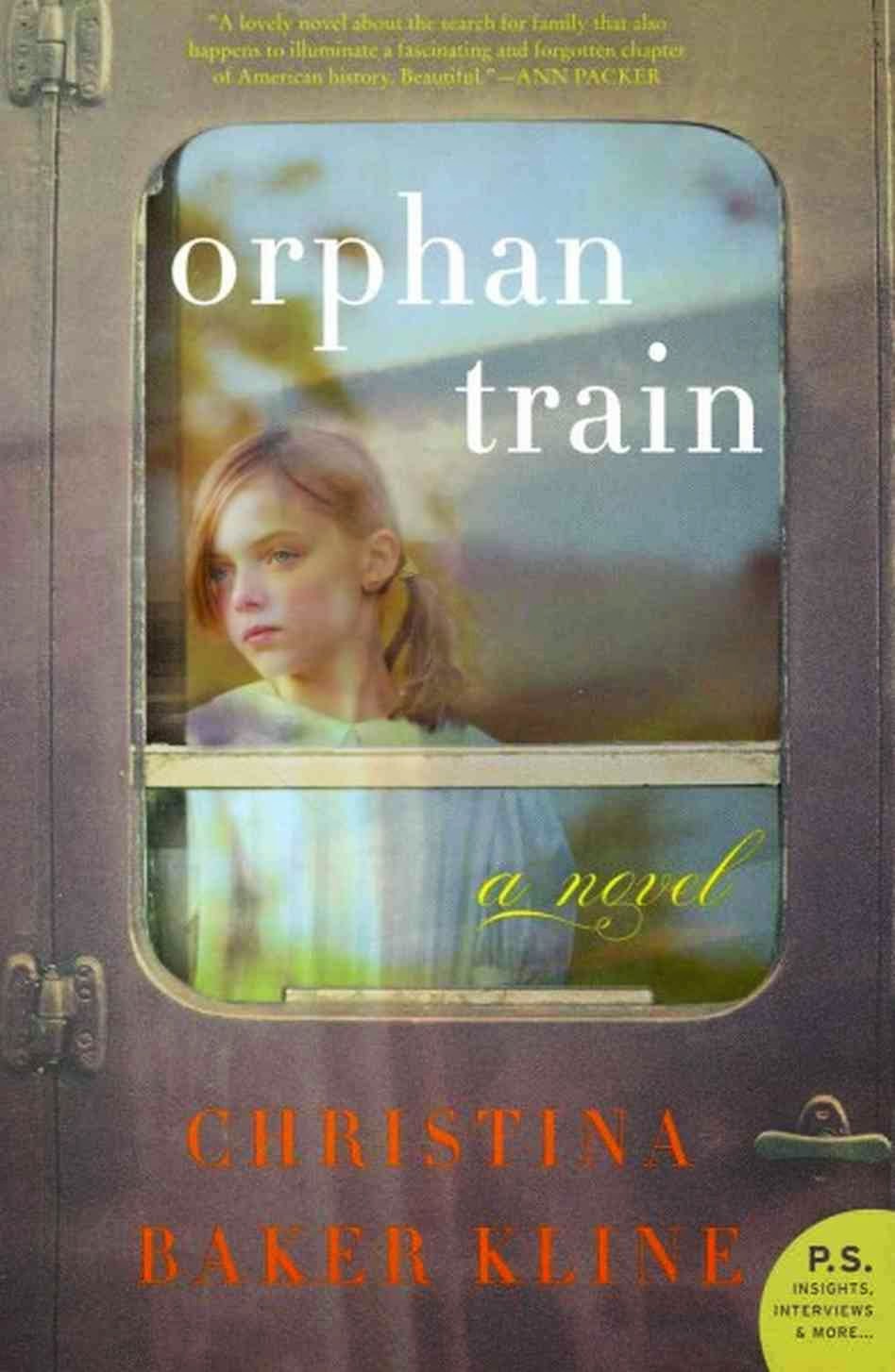
Orphan Train - Christina Baker Kline


These days, I seem to be picking novels that have two parallel stories going that build to tell a more complete tale and explore common themes. Christina Baker Kline's novel is one more of that ilk. In it, her modern day protagonist, Molly completes a school oral history project in which she must ask an interviewee questions about their lives and change. What did you choose to take with you? What did you leave behind? What insights did you gain? Deep questions, all.

Molly is a teenager that will be aging out the foster care system at the end of her high school experience. She has been shuttled about from one foster family to the next over the years. She travels light. She guards her emotions and puts on a Goth facade that isolates her from those around her at school. She tries to never get too close to anyone, as she never knows when she'll be pulled from one family and school to be plunked down in another.

Vivian Daly is an elderly retiree, living in her vacation home in nearby Bar Harbor, Maine. Before retiring, she lead a life as a successful department store owner in Minnesota and has decided that her attic must be cleaned out, but can't manage the heavy work it takes to jockey boxes and cartons, filled with nearly a century of life's artifacts and detritus.

Molly, gets in trouble with the local library when she attempts to steal a book. In order to avoid legal hassles with the foster care system, she signs on to do community service hours and gets hooked up with Vivian Daly. She will volunteer to help Mrs. Daly clean out her attic and thus begins a wonderful friendship. Both characters are guarded about being too open with each other, but as time goes by and the community service hours mount up, Molly and Vivian find common bonds that will help each of them ponder the losses they've had in life, the important things and values that they have carried with them over time, and the need for true emotional connection with others.

I was talking with a friend about this book. She was saying that the local middle school teachers were looking at this book as a read for their students. We both thought it more appropriate for high school. The reading level is not difficult, but the content and topic seemed a bit advanced for young kids. This book deals with immigration and the prejudices that were common during the early 1900's towards immigrants, family losses, abuse, alcoholism, mental illness, rape, the orphan trains that ran from eastern urban centers to midwest towns that brokered 'homes' for young street children and orphans, modern day foster care and the problems with oversight, building emotional relationships and mending those that are 'broken' emotionally. Deep topics, all. I honestly thought discussion of the topics would be more fruitful with older kids. The issues of authority and system failure when abuse and rape are involved would be valuable discussions for teens to explore these days, given what we're seeing in the press.  The issues of immigration and how we deal with the poor and needy could also be valuable discussions with older kids, but could be too 'gritty' for middle school aged kids (IMHO). The historical topic of the orphan trains is pretty complex too and worthy of further research to find out the true stories of thousands of children who were shuttled out of the cities in a Progressive Era social experiment that, while well-meaning, was poorly monitored in many cases. So ... this novel has a lot of 'meat' for a simple story.

The themes don't bog down the story, but they're there. Kline moves her novel along really well, jumping between modern day Maine and Depression-era Minnesota. The reader learns of the tough start to Vivian Daly's life as she is shifted from one foster family to the next during her early teen years. Molly, in finding out certain details of Vivian's life sees the perfect interviewee for her history project and in the process must confront those questions in her own life. All ends well in this book, but one is left to wonder about those thousands of kids and their real life stories ...

A fast and thought-provoking read ...


Thursday, November 20, 2014

The Confession - John Grisham


The wheels of justice grind so damn slow. And yet, if one were a condemned man living the nightmare of Death Row, all that time might just be the greatest gift given. THAT IS ... if the system weren't so darn slanted. In this particular look at the legal system and the society around hot issues, John Grisham takes on the death penalty and the state of Texas. The story revolves around a missing person case, an assumed murder, a railroaded young man (who happens to be black), a heavily coerced confession of rape and murder, a zealous defense lawyer with a real crazy streak, a forthright Luthern preacher, an ex-con with a strange onset of conscience, and the police, politicians, and legal system in which all of them are embroiled.

This was a hard book to put down, as there is so much going on in it - from the frenzied last minute appeal process to the wranglings and avoidance of the appellate judges and lawyers- from the emotional rollercoaster that the families of the presumed victim and the presumed killer ride before the death sentence date arrives to the tense and delicate discussions between preacher and confessor - from the circus of the media trucks to the smoky destruction of black and white churches in the town where the trial has been based. The pages fly by.

There have been books that I've read that have made me think deeply on my feelings about capital punishment. Dead Man Walking, In Cold Blood, and Helter Skelter come to mind immediately. Each time, I've had such strong reactions that it surprised me. This book also caused soul searching. The legal system is portrayed as broken, manipulated in the worst way, politicized for the sake of careers, and gawked at by media and public alike. Victims and accused become commodities to be exploited, played for digital bits and left aside when a bigger story comes along. Truth is a thing that is beside the point.

Somewhere in that muddled mess is the humanity behind the concept of justice and truth. It comes to the fore in the character of Rev. Keith Schroeder, a man placed in the position of knowing the truth and having the chance to right a wrong. Righting that wrong, though,takes him on a strange trip into the heart of the legal wranglings around the death sentence of a young man who has sat and watched the wheels of justice grind away and waited for too long.

Another good read from John Grisham ...


Monday, November 17, 2014

A Discovery of Witches/Audio Version - Deborah Harkness


Something light and fluffy. That was what I wished for after the last read, so what better than a romance? That's exactly what one gets when one cracks the pages (or plops the CD into the player) of the first in the Deborah Harkness 'All Souls Trilogy' series. This book spent time on the NYT best seller list when it came out. I'd seen the title on the library shelves, but always shied away. I was thinking that it would probably be taking a page from the 'Twilight' trend of YA chick lit. 

I was right. I listened to this in the kitchen, as I performed the nightly dinner ritual. At times, I laughed at how cliche some of the writing becomes. Matthew Clairmont is always ruggedly handsome, with just the right amount of chest showing, knows everything about wine (woman's fave beverage, right?), has the appropriate arrogant attitude and physical strength to throw his woman over his shoulder when she shows any sign of fainting or fatigue. Oh, by the way. he's a vampire. 

Diana Bishop is a brilliant history scholar who is deep into research on the mysteries of alchemy. Working at Oxford University, the books are flying off the shelves as she prepares for a scholarly conference at which she is supposed to 'present'. Things get muddled when she discovers a long hidden text that has been lost to civilization for ages in the depths of the Bodelian Library. The moment she touches the book strange forces are unleashed within her. Yup, she's a witch who has been in denial of her powers and the book brings on a power surge, so to speak. 

The book escalates from that one incident to unleash a history of vampires, demons, and witches that becomes a name-dropper's paradise. The novel revolves around the steamy relationship that develops between Matthew and Diana and references to actual historical events in history that become linked to the premise that vampires, demons and witches have lived with we, mortals for ages and have been at the center of many of the great advances of civilization. Matthew and Diana become a parallel to Romeo and Juliet, forbidden lovers, a lesson in race relations, so to speak. Vampires and witches don't mix and they will have to fight old taboos to maintain their relationship. Oh, and there's the matter of that book Diana discovered that started the whole mess! It's front and center to the story - a convoluted tale that will take A LOT of telling. Hence, the series. 

This is definitely a light and fluffy series - a combination of Outlander meets Harry Potter meets Twilight - a treat for young romance fans ( horny women, is what my husband said, as he passed through the kitchen last week). Harkness builds her story on strong description. She has an obsession with telling her readers the fashion details of both Matthew and Diana, using dialogue over endless cups of tea and glasses of wine as a platform for moving the plot along, and placing the character of Matthew Clairmont at the crucial points in history with very famous historical figures. It gets a bit annoying at times, but I suppose that was half the fun of writing a story such as this! The tales of witches, demons, and vampires are so mythic that they cross over all cultures and civilizations, cutting a  ... well, romantic swath. 

I finished the audio version over the weekend - probably won't continue on with the series until I need another light read. Don't get me wrong here. There IS a place in everyone's reading life for lighter, undemanding reads that are pure escapism. Harkness has cashed in on a profitable niche with her 'All Souls Trilogy'. More power to her!


Friday, November 14, 2014

What She Left Behind - Ellen Marie Wiseman


What She Left Behind is a heart-wrenching story that takes its roots from the actual incident of historians finding suitcases left behind in an attic space at a decrepit mental institution in New York state.  The Willard Asylum for the Chronic Insane was operated from 1869 until 1995 when it was closed. It was a massive complex during its heyday, housing chronically insane and feeble-minded patients. The complex had its own farm, shoe shops, sewing facilities, kitchens, et cetera and was a model for mental health care during the Progressive Era. Of course, the Progressive era also was a time when psychiatric care was all wrapped up in the eugenics movement, the move to intensive drug therapy, extreme forms of brain research, and a host of controversial therapies like electroshock and water therapies. UGH. The Great Depression and changes within mental health and government funding, however, created a warehouse mentality within the care system - a recipe for neglect, abuse, and worse. UGH.

Enter this book. Ellen Marie Wiseman penned a fictional account of one patient who is admitted in the 1920's, after defying her father's strict edicts. Upon refusing to marry the man he has picked for her, young Clara is admitted to a sanatarium near her New York City home. The forced admission is a punishment by her father, an attempt to cow her into submission and away from her 'hysterical' behavior. When the stock market crashes and her father falls on hard economic times, he can no longer pay her fees at the sanatarium. Rather than have her released, he relinquishes her to the state mental health system and she is shuttled off to Willard Asylum. There begins a truly horrific experience - physical abuse, forced medication, isolation and sensory deprivation, a pregnancy (her beloved child with her true love) and birth that ends in having her child removed from her care, and on and on... UGH. How messed up were human rights laws and the mental health system at that time, huh?

A parallel story is also told in this novel. It centers on Izzy, a young woman who has grown up in foster care. She is about to graduate from high school and out of foster care when she is settled with a couple in the Finger Lakes region of New York state. Her foster parents are involved in a historical investigation of Willard Asylum and Izzy accompanies them on forays to examine and catalogue the suitcases found in attic space at Willard Asylum. Izzy stumbles upon Clara's trunk and the journal that is inside it. The plot thickens.

This was a hard book to put down, but I had to at some of the particularly emotional points. The thought of the level of loneliness and fear going through Clara AND Izzy was, at times, overwhelming to me.  I always returned to the book, though, as I needed to know how two systems of government intervention - mental health and foster care- would deal with these two likeable characters.

One leaves this book with a goodly amount of righteous rage that people could EVER be treated so poorly in this country, that women were EVER so under the thumb of parents and spouses that they could be packed away into hospitals and asylums without so much as a legal or medical review, that children in the foster care system can be left untreated and passed from one family to the next with shoddy oversight and so-so treatment for traumas that have gotten them into the system in the first place. UGH.

A good read, but an emotional read ... after this one, I need a read that's really light and fluffy.

I'll leave this post with some links ... if you're at all curious about Willard Asylum and the suitcase project ...

Willard Asylum Photos - http://adwheelerphotography.com/2013/03/15/the-asylum-by-the-lake/

Willard Suitcases Project - http://www.willardsuitcases.com/